

The 2026 FIFA World Cup™ Security Blueprint: Protecting Toronto’s Infrastructure During the Global Spotlight
Toronto is currently the fastest-growing city in North America, and in 2026, it becomes the center of the sporting world. The arrival of the 2026 FIFA World Cup™ represents more than just a series of matches from June 12 to July 2; it is a massive urban “pressure test” for our city’s infrastructure, transit hubs, and commercial centers.
For facility managers and operations directors, the question isn’t whether you have guards on-site, but whether your security strategy is resilient enough to handle a global influx of millions while maintaining day-to-day operational continuity. In 2026, the baseline for safety has reached a new height, and generic “static” guarding is no longer a viable defense.
The Pressure Test: Preparing for 2026’s Unprecedented Urban Influx
Toronto’s population growth of 6.6% has already outpaced many frontline public capacities. When the World Cup arrives, this density will explode. Planners are bracing for peak staffing shortages and potential “absolute disasters” regarding transit delays.
The “unspoken fear” for property managers in the downtown core is the Response Gap. When millions of people are navigating the Financial District, local police resources are understandably prioritized for high-level Priority 1 emergencies.
- The 42-Minute Problem: Currently, the average police response for a commercial alarm in Toronto is 42 minutes.
- The Latency Trap: During a massive global event, lower-priority calls (Priority 3 and 4) can wait between 57 and 89 minutes.
A commercial center cannot afford to wait an hour for security verification during a global event. ASP Security Services provides the 45-Minute Standard, with the proven capability to respond to emergency situations with less than 45 minutes’ notice. This rapid mobilization is the only way to ensure that a localized disruption doesn’t cascade into a multi-million dollar economic loss.
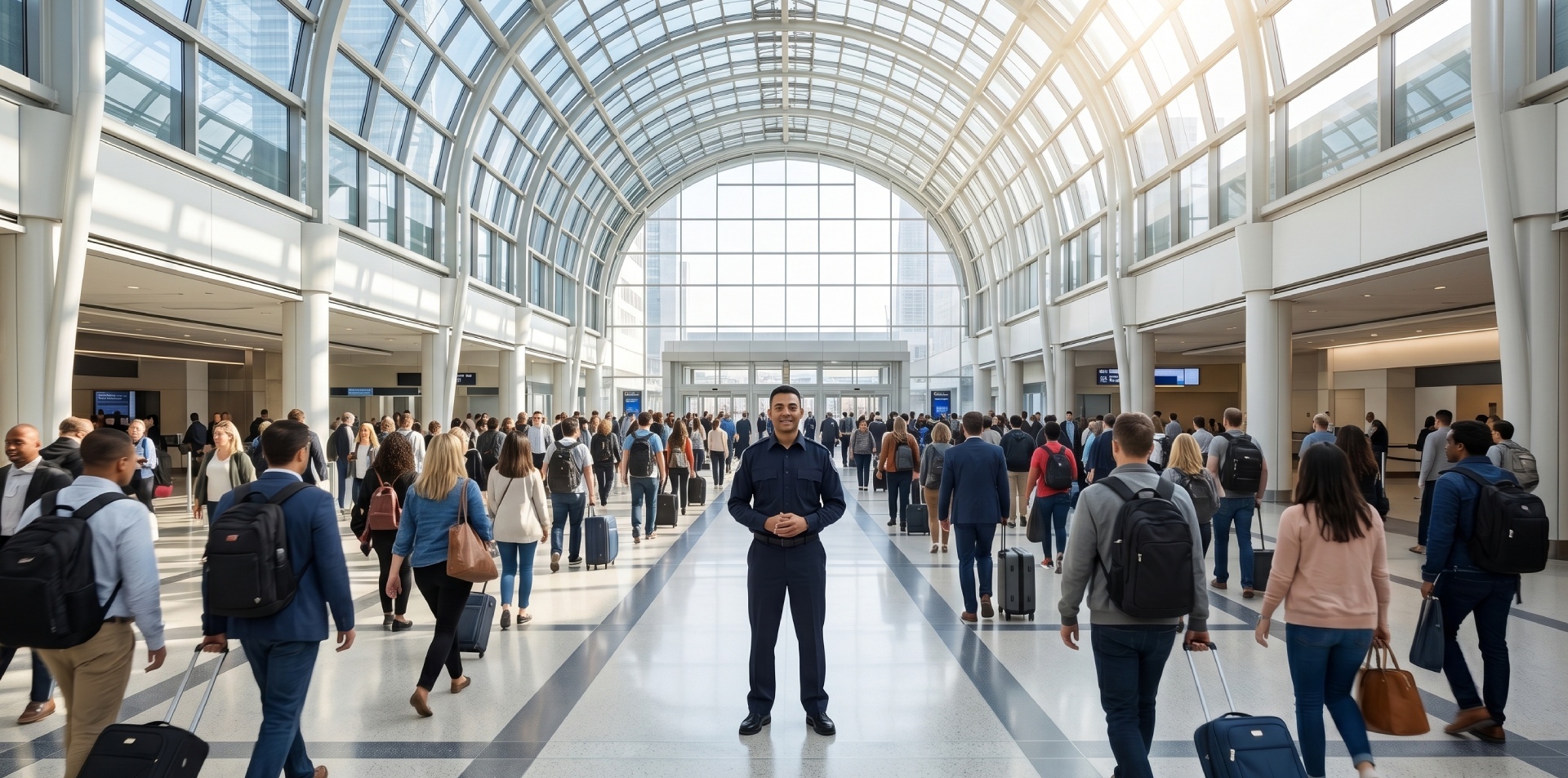
Transit Under Fire: Securing Union Station and Pearson International (YYZ)
Transportation hubs serve as the primary gateways for the 2026 World Cup, making them the most vulnerable points in the city’s infrastructure. Union Station and Toronto Pearson (YYZ) are already undergoing intense revitalization and regulatory tightening to prepare for this shift.
The Aviation-Grade Standard
As a subsidiary of ICTS Europe, ASP brings an “Aviation-Grade” discipline to commercial security that legacy firms simply cannot match. This standard is critical for the Enhanced Non-Passenger Screening (NPS) mandates introduced by Transport Canada in 2025.
- 100% Screening Rates: Security checkpoints at major hubs now require 100% screening for vehicles and occupants to mitigate internal threats.
- Operational Readiness: ASP performs rigorous “Stress Tests” to ensure that checkpoints can handle high-volume bottlenecks without compromising safety.
Community Safety Ambassadors
At Union Station, the traditional guard has been replaced by the Community Safety Ambassador (CSA). These specialists often hold degrees in social services or justice studies, serving as a vital link between the public and emergency services. Their role isn’t just “enforcement”—it’s building relationships and de-escalating conflict in a high-pressure urban environment.
The Biological Fail-Safe: Why Canine EDD is the Critical Defense for 2026
In the “Software Eating the World” era of 2026, we have seen a massive shift toward AI-driven monitoring. However, for clearing a densely populated event venue or an air cargo terminal, nothing matches the biological perfection of a Canine Explosive Detection (EDD) team.
ASP is the largest private Canine EDD provider in Canada. Our partnership with global entities like DiagNose provides a pool of over 200 certified dogs worldwide.
- Scent Decoding: A trained canine can identify trace elements of explosives and firearms almost immediately, even when masked by complex odors or hidden in bulk cargo.
- Mobility: Unlike static sensors, a K9 team can sweep a Class A lobby or a stadium seating area in a fraction of the time, providing “eyewitness” verification that satisfies the Toronto Police Verified Response Protocol.
- FIFA Ready: We have been preparing the “FIFA Generation” of detection dogs specifically for the 2026 World Cup, ensuring that every high-profile event venue in the GTA has access to a certified defense.

Behavioral Detection over Enforcement: The “Ambassador” at the Gates
One of the top anxieties for Toronto decision-makers is the risk of a “use of force” incident going viral during a global event. In 2026, the private security force acts as the critical buffer between the public and enforcement agencies.
The ASP Ambassador Model elevates the role from a reactive guard to a proactive specialist. This is achieved through a sophisticated 4-Stage Engagement Process:
- Active Crowd Scanning: Moving beyond static monitoring to dynamic situational awareness.
- Engagement: Proactive, friendly interactions that humanize the security presence.
- Casual Conversation: Utilizing behavioral observation to identify potential threats while maintaining a premium customer experience.
- Course of Action: Rapid, informed decision-making based on proactive assessment.
By hiring for personality and training for the job, ASP ensures that its specialists “select the high road” even under the intense pressure of a global tournament.
Resilience and Reputation: Why Strategic Planning is Non-Negotiable
In 2026, “Resilience” has evolved from a sustainability goal into a core business imperative. For a Class A property, security is a brand asset that protects property value and tenant trust.
Transparency and Certification
ASP is ISO 9001:2015 certified for administrative functions related to uniformed security guards. This ensures a “Truly Transparent Partnership” where clients have real-time access to incident reports and performance audits. In an era of “Uncertainty and Complexity,” this level of procedural discipline is what differentiates a “trophy property” from a commodity building.
Cyber-Physical Convergence
Modern buildings are “smart” ecosystems. The 2026 threat landscape involves “cyber-physical” breaches where digital exploits lead to physical paralysis. ASP addresses this by integrating cloud-based reporting and AI-driven monitoring into the human-centric patrol, ensuring there are no “technological blind spots”.

Security Matters™ Because Your Brand is on the Line
The 2026 FIFA World Cup™ is more than a game; it is a moment for Toronto to shine on the world stage. But for those responsible for the city’s commercial and transit infrastructure, it is a mission.
You cannot navigate the risks of 2026 with the security model of the past. You need the Ambassador model. You need Canine EDD. You need a partner that understands that in high-stakes environments, Security Matters™.
Is your facility truly resilient for the 2026 spotlight?