

Managing Public Interactions – Security Guards’ Safety
By Laurel Woodhouse, H&S Manager and Vince Gemmiti, Training Manager, RES/CIC
Working in public-facing security roles means you’ll encounter a wide range of behaviours— from confused or upset members of the public to aggressive or unpredictable individuals. Keeping yourself, your colleagues, the public, and clients safe starts with prevention, calm communication, and knowing when to escalate. Use the guidance below during every shift.
Key Principles
- Stay aware: scan your area for potential issues (crowds, alcohol/narcotic use, obstructions) and position yourself to maintain visibility and a safe exit.
- Stay calm and professional: your tone, posture, and language set the tone of the interaction.
- Prioritize safety over being right: de-escalation and containment are primary goals; enforcement and confrontation are secondary.
- Communicate and document: notify supervisors/ dispatch early if concerns arise and record the incident afterward.
Verbal Judo — Practical Tips
Use the 3-step approach: Ask, Set Options, Confirm
- Ask — politely request cooperation (“Sir, could you step back from the platform edge, please?”).
- Set Options — present clear, limited choices that are acceptable to you (“You can wait behind the line, or I can call assistance.”).
- Confirm — close the interaction and document the outcome (“Thank you for moving back. I’ll stay nearby until the train arrives.”).
- Use calm, directive language: short sentences, low/ moderate tone, non-accusatory words.
- Name the behavior, not the person: “I cannot allow this bag on the seat” rather than “You’re being reckless.”
- Use empathy statements: “I can see you’re upset. I want to help. Let’s do this together.”
- Avoid arguing, sarcasm, or raising your voice.
Safe Distance & Positioning
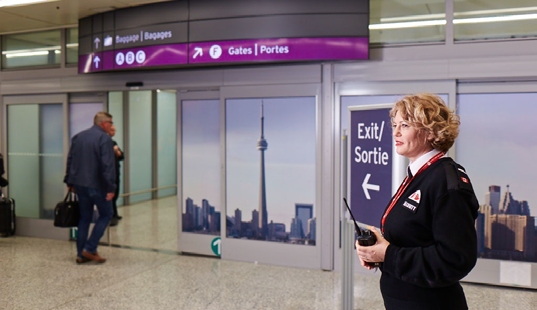
- Maintain a non-threatening distance: usually 1.5–3 meters (6–12 ft) depending on the person’s behavior and environment.
- Keep an unobstructed path to an exit; position yourself at a slight angle rather than directly face-to-face.
- Use environmental barriers when appropriate (desk, counter, open doors) to preserve space.
- If a subject becomes agitated, increase distance and create space for escape—not to retreat from duty, but to reduce risk.
- Be prepared to reposition, away from or within the situation depending on your assessment.
When to Call Police or Additional Support
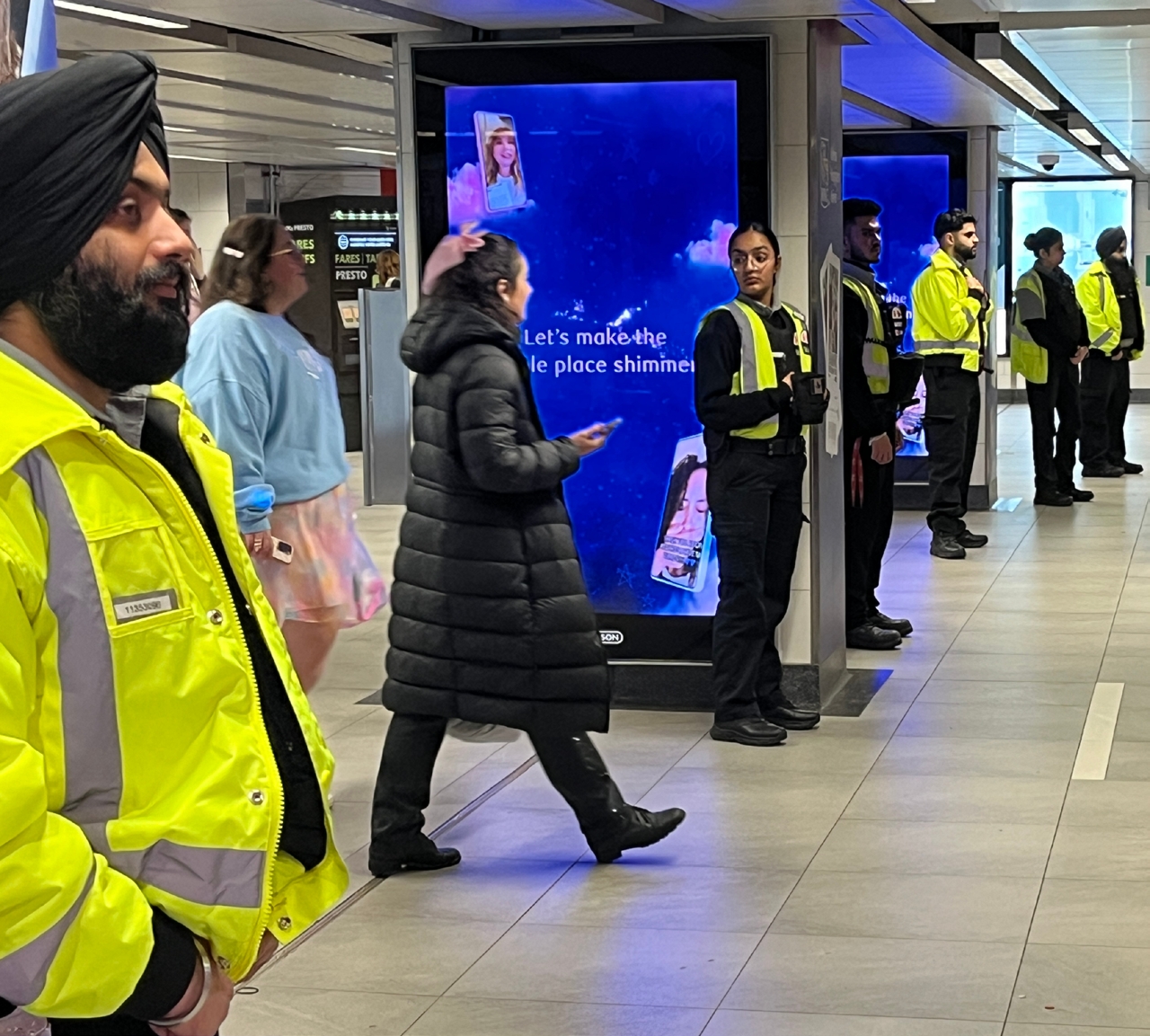
- Immediate threat to life, weapons present, or violent assault.
- Subject displays clear intent to harm self or others.
- Crime is in progress and requires law enforcement (theft in progress, forced entry).
- You cannot safely control the situation or the subject becomes physically aggressive.
- Persistent refusal to follow lawful safety directives that create imminent risk (e.g., refusing to leave a secure area).
- If in doubt and risk is increasing, call dispatch for advice and backup.
Scenario + Do / Don’t Checklist
Scenario: Late evening on a transit platform, an irate passenger shouts at staff after being denied access to a restricted area. He paces aggressively and throws a small item toward the platform edge.
Do:
- Keep a safe distance and signal backup immediately
- Use a calm, firm voice: “Sir, please step back. I’m calling for assistance.”
- Offer limited options: “You may wait behind the line or move to the seating area.”
- Use a neutral stance and maintain clear sightlines.
- Document the incident and report to your supervisor and dispatch.
- Use the relational approach by asking them what you can do to help: “I can see you are struggling…” or “I want to help you, talk to me.”
- Use active listening to understand what the problem may be to assist them in finding a solution.
- Collaborate with them, give them the power to solve their crisis rather than imposing one upon them.
Don’t:
- Approach directly or block his/her exit path.
- Match aggression—do not shout or use insults.
- Engage in prolonged argument or try to physically restrain unless trained and necessary.
- Leave the area without notifying dispatch or a colleague.
Quick Reminders
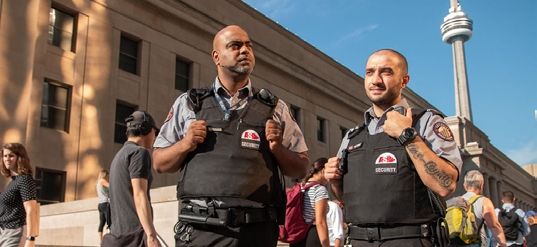
- Report all interactions that escalated or made you feel unsafe, even if no injury occurred.
- Refresh de-escalation training every year and participate in scenario drills.
- Keep radio/phone charged and accessible; know sitespecific escalation numbers.