By Keba Walters, Assistant Manager, Recruitment RES/CIC

At A.S.P. Incorporated, a few of the values that drive our team are Inclusion and Empowerment, and the first step toward those values is to listen. Our recruitment team proudly At A.S.P. Incorporated, a few of the values that drive our team are Inclusion and Empowerment, and the first step toward those values is to listen. Our recruitment team proudly held our first Voices of ASP focus group across all divisions to hear straight from our employees what they wanted to change, and what we could continue to do, to make ASP a great place to work. Voices of ASP consisted of volunteers from Aviation, OSR, Canine, and Security, as well as Supervisors, Concierges, Specialists, and Crossing Guards from the Residential and Commercial Divisions.

Some areas where our employees felt we were doing well and wanted to continue were:

  • Team events such as Wonderland Day and Christmas parties
  • Employees reported that they enjoyed the types of jobs ASP had
  • Good growth opportunities and great career experience in security
  • Improvements connecting to and communicating with the management team

Constant improvement is pivotal to any growing organization, and we welcome the feedback. For those who were not able to participate in our focus group event, we will be opening the opportunity to speak with our team 1on1 to anyone interested. What you say remains completely anonymous but allows us to provide feedback directly to your managers.

Some of the feedback we received regarding areas of improvement:

  • Better acknowledgement for going above[1]and-beyond
  • Increases in pay for minimum wage employees
  • Improvements to uniform fit, quality, and ensuring all guards are wearing it properly
  • Better systems to get in touch with Scheduling Team
  • More on-the-job training

If you’d like your
voice heard, please reach
out to ASP Recruitment at
recruitment@security-asp.com
for a link to a 15-minute meeting
with someone from our team
before January 30th, 2022

Let’s Make the Fourth Wave the Final Wave!

What Can We Do?

  • Get vaccinated – protect yourself and others
  • Be aware of risks associated with different settings
  • Wear face masks indoors – properly worn face masks are your best defense against the virus
  • Continue to wear a mask in busy outdoor areas like campgrounds, playgrounds and dog parks
  • Maintain social distancing – Health Canada still encourages us to minimize close contact with others.
  • Keep hands and surfaces clean
  • If you feel sick, even with just a sore throat, you should stay home and self-isolate if you have symptoms
  • Continue to avoid non-essential travel
  • Socialize outdoors whenever possible
  • Avoid crowded indoor spaces with poor ventilation —especially with the unvaccinated.

Take Care of Your Mental and Physical
Health by:

  • Adjusting your expectations based on what is in your control
  • Have a backup plan if something is not available (school/daycare, gym, etc.)
  • Take advantage of nice weather and spend time outdoors
  • Acknowledge that pandemic fatigue is real and make use of our EAP (LifeWorks program) if you are experiencing mental health concerns like anxiety, stress, or depression

Collectively, our actions can help prevent the spread of COVID-19 and keep our families, friends, and co-workers safe. As the pandemic drags on through a fourth, intense wave, front line hospital staff are running on empty tanks, and we owe it to them to take precautionary measures and make it through this wave without overburdening our healthcare system.
By Darren Scott, Manager Resource Planning

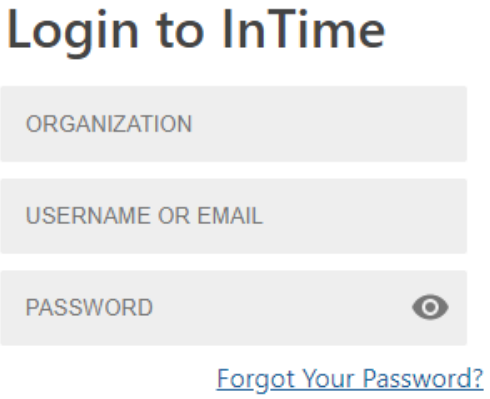
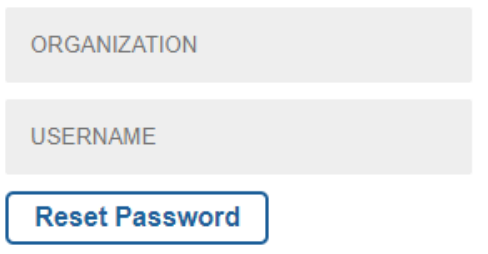
For security reasons, every 40 days your password for the inTime app will need to be reset. Please follow the below directions to reset your password.

1. Select Forgot Your Password

2. Enter Organization ASPInc, Username
and Select Reset

A link will be emailed to you. Follow the instruction in the email. If you do not receive an email contact Human Resources to update your email address in your profile.


By Darren Scott, Manager Resource Planning

Never miss an available posting again using the inTime App. The inTime App improves communication by putting your schedule on your smart phone.

From the App you can:

  • View your schedule. No more logging on to your desktop to see what days you’re working and when you have vacations. Easily make plans around your work schedule.
  • Sign up for shifts and overtime
  • Apply for leaves
  • Sort and filter available postings
  • Receive mobile alerts and notifications. Was there a change to your shift start time? The app will send you an alert as soon as a change made.
  • Punch in and out

Have you set your Preferences?

Using your portal or inTime App you can tell Resource Planning when you prefer to work. When an individual shift is open, or a long-term assignment becomes available your preferences are reviewed to assist scheduling. Without having preferences set on your portal you may be overlooked.

For more information regarding the App or if you require assistance, please contact the Resource Planning Department.


By Debbie Ciccotelli, Vice President, Strategic Initiatives

The fourth wave of COVID-19 that public health experts warned us about for months has arrived and it is being referred to as the ‘pandemic of the unvaccinated”. Each wave of the COVID-19 pandemic raises different levels of public health and personal challenges. Public health authorities have indicated that the highly contagious Delta Variant is driving the fourth wave and that they are seeing an increase in numbers, which is mostly amongst the unvaccinated. The Delta variant has prolonged the pandemic, made daily life more difficult to navigate and has turned back the clock on our collective plans to return to a relatively normal life. Experts unanimously agree that people who aren’t vaccinated — including children under 12, are most at risk in this wave of the pandemic.

The good news is that millions of Canadians have now been vaccinated. As of September 16, 2021, provinces and territories have administered over 54 million doses of COVID-19 vaccines, with the latest data indicating that over 85% of people aged 12 years or older have received at least one dose of COVID-19 vaccine and over 79% are now fully vaccinated. Evidence demonstrates that full vaccination (2 doses) combined with continued public health measures provides substantial protection. As we head into the fall, it will be important to have as many eligible people as possible fully vaccinated as quickly as possible to protect ourselves and others, including those with compromised immune systems or children who are not eligible – especially as cases rise within younger populations. Because children can’t be vaccinated, it’s especially important that those around them are. It is important to ensure that information related to covid-19 vaccines comes from a reliable source, therefore please see the link to the government of Canada article https://www.canada.ca/en/public-health/services/diseases/coronavirus-disease-covid-19/vaccines.html

Let’s Make the Fourth Wave the Final Wave!

What Can We Do?

  • Get vaccinated – protect yourself and others
  • Be aware of risks associated with different settings
  • Wear face masks indoors – properly worn face masks are your best defense against the virus
  • Continue to wear a mask in busy outdoor areas like campgrounds, playgrounds and dog parks
  • Maintain social distancing – Health Canada still encourages us to minimize close contact with others.
  • Keep hands and surfaces clean
  • If you feel sick, even with just a sore throat, you should stay home and self-isolate if you have symptoms
  • Continue to avoid non-essential travel
  • Socialize outdoors whenever possible
  • Avoid crowded indoor spaces with poor ventilation —especially with the unvaccinated.

Take Care of Your Mental and Physical
Health by:

  • Adjusting your expectations based on what is in your control
  • Have a backup plan if something is not available (school/daycare, gym, etc.)
  • Take advantage of nice weather and spend time outdoors
  • Acknowledge that pandemic fatigue is real and make use of our EAP (LifeWorks program) if you are experiencing mental health concerns like anxiety, stress, or depression

Collectively, our actions can help prevent the spread of COVID-19 and keep our families, friends, and co-workers safe. As the pandemic drags on through a fourth, intense wave, front line hospital staff are running on empty tanks, and we owe it to them to take precautionary measures and make it through this wave without overburdening our healthcare system.

By Laurel Woodhouse, Manager Health and Safety

Why Get Vaccinated for COVID-19?

Vaccines Work

Scientific and medical evidence show that vaccination can help protect you against COVID-19. Studies are also showing that vaccinated people may have less severe illness if they do become ill from COVID-19.

Vaccines Are Safe

Only vaccines that are proven to be safe, effective and of high quality are authorized for use in Canada. The COVID-19 vaccines have been rigorously tested during their development and then carefully reviewed by Health Canada. The vaccines cannot give you COVID-19 because they don’t contain the virus that causes it. The vaccines also cannot change your DNA.

Types of Vaccines

mRNA vaccines provide instructions to your cells for how to make a coronavirus protein. This protein will trigger an immune response that will help to protect you against COVID-19.

Viral vector vaccines use a virus that’s been made harmless to produce coronavirus proteins in your body without causing disease. Similar to mRNA vaccines, this protein will trigger an immune response that will help to protect you against COVID-19.

Continue to Follow Public Health Measures

COVID-19 vaccines are important tools to help us stop this pandemic. Right now, we still need to follow public health measures to reduce the spread of COVID-19 and save lives.

Federal, provincial and territorial governments will continue to assess the risk of COVID-19 spread in communities. Measures will be adjusted over time as more people are vaccinated. Everyone is looking forward to a future when we can be together.

Until then, we need to protect each other, especially those who are still vulnerable to severe disease from COVID-19.

Get the facts. Visit Canada.ca/covid-vaccine to learn more.


By Trisha Murray, Director Canine and Resource Planning

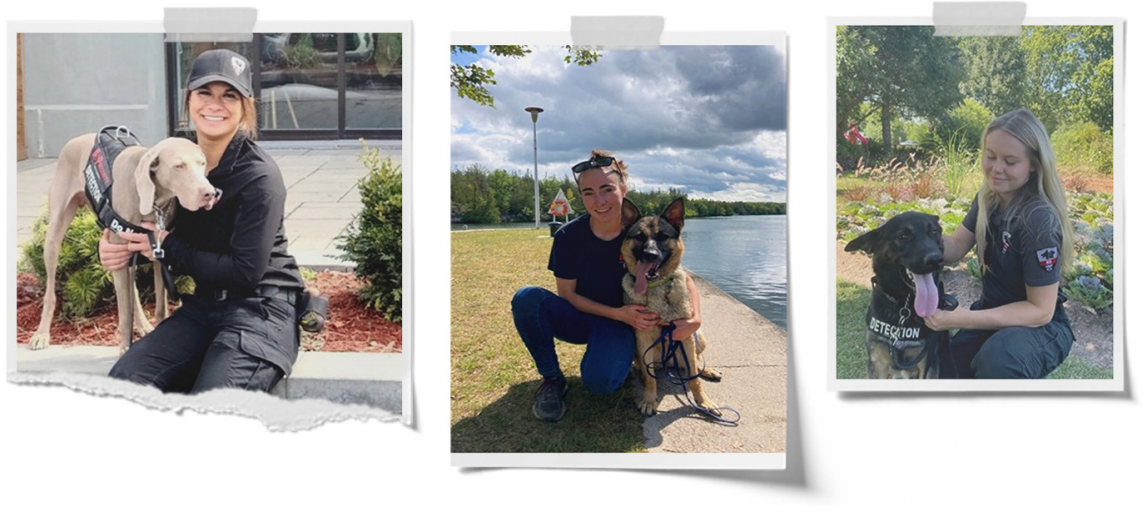
The canine unit is thrilled to count 23 commercial/cargo K9 handlers and 4 Aviation K9 handlers as Transport Canada certified. Our trainers, led by Russ Fox, have been busy for the past several months tweaking and fine tuning our training regime to ensure success at the government test site, and the hard work is paying off!

Our trainers also just completed another training course in Ottawa preparing six new K9 handlers for the field. Within this group, 2 handlers are entering the Toronto mix and 4 are off to Montreal and Quebec City. Our next course starts in October where we will be training another six handlers for Toronto and Moncton, NB. Congratulations to our newest grads!

“After a busy and hot summer, our pups are ready for some crisp Fall air! We hope everyone has a terrific Autumn and spooky fun filled Halloween!”


By Daniel McCormack, Training Coordinator

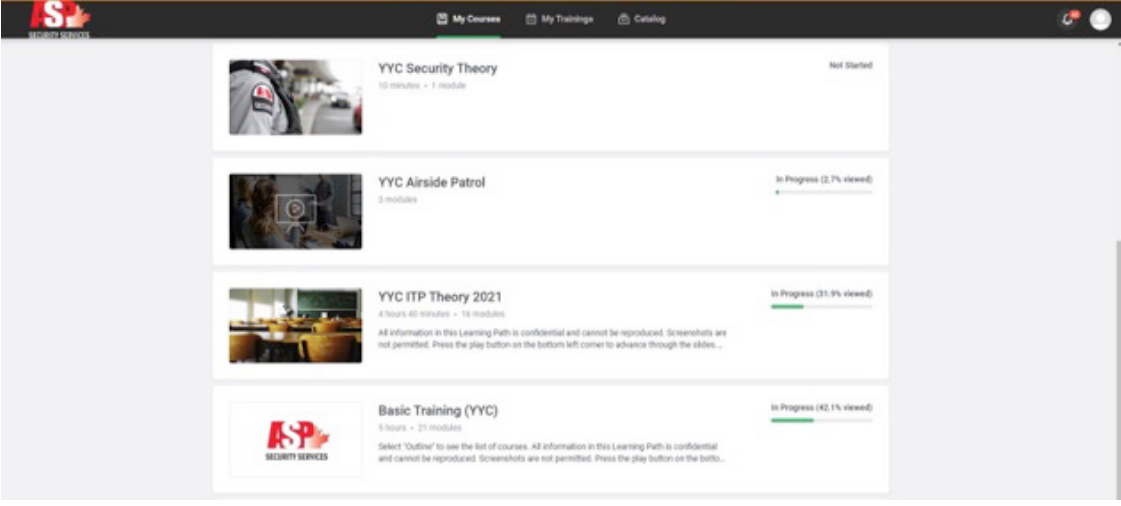
Hello ASP! Welcome to the Autumn edition! YYC has been ramping up a lot over the summer; things are re-opening, volume is increasing and as such, so is our workload. The feedback from the client has been positive on our continued dedication to getting the job done. One way that we are executing this is through new training that will continue to further hone our skills.

The staff at YYC have been especially aware of the changes made to training over the last year, which has received extremely positive review from the staff (a 4.8/5 average on iSpring!) and it is just the first step on the track to continue to raise the bar.

One of the major changes this quarter came in the form of a new daily post inspection — staff here have made note that they appreciate the increased interaction with the supervisors. It includes a random question near the end of the inspection which is generally themed toward the most recent operational information that we have received. The response from staff is that they appreciate the new snippets of information that help them do the job better. It’s been helping to ensure that everyone has all the information.

“We have been expanding the training to include de-escalation training, breach response and we are moving towards more in-depth security theory across all the roles we have in Calgary.”

Some of the in-class training has been put on hold due to COVID restrictions, but with the positive outlook on vaccination rates across the staff, and across the country, we are all optimistic that in person training will be able to resume soon. Some of the training cued for staff include patrol theory and incident response. I know I’m excited to deliver the new training! Until next time, take care of yourselves!


By Angus Wilson, Director, Aviation

As we move into fall there has been a lot of activity within the Aviation Division over the last 3 months which are worth highlighting.

Pearson Airport Security

  • The Greater Toronto Airports Authority (GTAA) has implemented a mandatory vaccine policy effective September 14, 2021 that requires all employers and organizations operating at GTAA to ensure that their employees achieve mandatory vaccination by October 31, 2021 by receiving the required Covid 19 vaccine approved by Government of Canada.
  • As we begin business resumption with GTAA we have had multiple conversations with regards to posts reopening as we work together to recover from Covid.
  • Mask enforcement still remains a priority for GTAA and additional Mask Enforcement locations have been identified.
  • As of October 1st, 2021 airport staff will be relocated to the Value Park Garage from the terminal parking garages.

I’d like to introduce Sherry Akbar as our new Training Coordinator for the TPIA security department. Sherry brings a training background in Adult Education with experience as a Lead Facilitator for the Region of Peel. She also brings many years of experience in aviation screening security with extensive knowledge of Transport Canada regulations. Her expertise with in-class and individual training will be a great addition to our training team at Toronto Pearson Airport. Sherry will be working with Nataliya Boychuk to deliver the Access Control New Certification and Recertification courses along with Basic Training and any pre-deployment cross-training sessions.

“Please join me in welcoming Sherry Akbar to the team!”

SHERRY AKBAR – Training Coordinator

Calgary Airport Security

  • Calgary Airport Authority is expecting to reopen certain locations in their terminal due to increased passenger volumes, this could potentially lead to some of our previous posts reopening.
  • We are currently in negotiations for extending the Security Contract with YYC.
  • We are working with YYC in the adaption of the Supervisor duties to create separate Airside and Terminal Supervisors.
  • Our Client Sherry Beard has moved on from YYC and has joined MLSE in Toronto, we would like to wish her every success in her future endeavours.

Sudbury Airport Security

  • ASP has negotiated an extension on the Contract with YSB.
  • With the increase in passenger volumes our staffing numbers have increased and we have created a better working schedule for our employees.

By Sarah Jessop, Secretary for the Diversity and Inclusion Committee (She/Her)

I
n June 2021, ASP’s Diversity and Inclusion committee ran our first ever Pride Month roundtable. This event was organized to celebrate ASP’s LGBTQ2S+ employees and their allies, and to address and understand the various issues LGBTQ2S+ individuals face in the workplace. I had the pleasure of co-chairing this roundtable with two remarkably special guests, Christine and Tanner Parkinson. Tanner, like me, identifies as an LGBTQ2S+ individual, and his mother Christine has publicly come forward as an advocate for our community. When I say they publicly demonstrate their commitment I truly mean it – Christine and Tanner were both interviewed by CTV News and CHCH in May 2021 after their Pride flag was stolen from their front lawn.

We kicked off the roundtable by discussing how acts of discrimination and harassment, both inside and outside of the workplace, have personally impacted many of us. Our attendees demonstrated bravery and vulnerability by sharing their own experiences with the group. This discussion led to some fantastic brainstorming and key takeaways that our Diversity and Inclusion committee will consider when designing inclusion initiatives.

LGTBTQS+ Pronouns & Terminology

One important topic of conversation that was raised during the roundtable was the importance of understanding and respecting LGBTQ2S+ pronouns and terminology. It’s important to note that these definitions are continuously changing, and they simply serve as a starting point in understanding LGBTQ2S+ identities and issues. If you ever have questions, please do not hesitate to reach out to our diversity and inclusion committee for more information: inclusive@security-asp.com

Pronouns

Pronouns are used in place of a proper noun, and we often use them when we are referring to someone without using their name. In English, the most common pronouns we use refer to one’s gender. For non-binary, transgender, gender non-conforming and queer people, these pronouns may not fit, and mistaking or assuming someone’s pronouns without asking first can be harmful.

Imagine if someone referred to you with the wrong pronoun – this would be upsetting, especially if you’ve corrected them already before.

You should never assume you know someone’s gender just by looking at them, and you should always respect the pronouns they select. Some of the most commonly used pronouns include, but are not limited to:

  • He/Him
  • She/Her
  • They/Them
  • Ze
  • Name – some people prefer their name being used in
  • place of pronouns.

Terminology

The below terms are defined by the Government of Canada, and they provide a basic understanding of LGBTQ2S+ terminology. Please note that this list is not exhaustive and these terms could change in the future.

LGBTQ2S+:

An inclusive term most commonly used in Canada. It stands for Lesbian, Gay, Bisexual, Transgender, Queer or Questioning, Two-Spirit and additional sexual orientations and gender identities.

Cisgender:

A person who identifies with the gender they are assigned at birth.

Gay:

A person who is sexually and/or romantically attracted to people of their same sex or gender identity. Traditionally this identity was reserved for men, but it has been adopted by people of all gender identities.

Gender-Fluid:

A person whose gender identity varies over time and may include male, female and non-binary gender identities.

Lesbian:

Typically a woman who is sexually and/or romantically attracted to other women.

Non-Binary:

(also ‘genderqueer’). Referring to a person whose gender identity does not align with a binary understanding of gender such as man or woman.

It is a gender identity which may include man and woman, androgynous, fluid, multiple, no gender, or a different gender outside of the “woman—man” spectrum.

Pansexual:

A person whose choice of sexual or romantic partner is not limited by the other person’s sex, gender identity or gender expression.

Queer:

Historically a derogatory term used as a slur against LGBTQ2 people, this term has been reclaimed by many LGBTQ2 people as a positive way to describe themselves, and as a way to include the many diverse identities not covered by common LGBTQ2 acronym.

Questioning:

A person who is uncertain about their sexual orientation and/or gender identity; this can be a transitory or a lasting identity.

Gender Expression:

Gender expression refers to the various ways in which people choose to express their gender identity. For example: clothes, voice, hair, make-up, etc. A person’s gender expression may not align with societal expectations of gender. It is therefore not a reliable indicator of a person’s gender identity.

Gender Identity:

Internal and deeply felt sense of being a man or woman, both or neither. A person’s gender identity may or may not align with the gender typically associated with their sex. It may change over the course of one’s lifetime.

Transgender:

(also ‘trans’). A person whose gender identity differs from what is typically associated with the sex they were assigned at birth.

Two-Spirit:

(also Two Spirit or Two-Spirited). An English term used to broadly capture concepts traditional to many Indigenous cultures. It is a culturally-specific identity used by some Indigenous people to indicate a person whose gender identity, spiritual identity and/or sexual orientation comprises both male and female spirits.

Closing Thoughts

The goal of our Diversity and Inclusion committee is to continue making ASP an inclusive environment where all employees are respected, valued, and given every opportunity succeed. Our June 2021 Pride Month Roundtable was instrumental in helping us achieve this goal. We encourage all of our employees, regardless of your sexual orientation or gender identity, to consider how you can be an ally to your LGBTQ2S+ coworkers. Addressing your colleagues by their chosen pronouns and not making assumptions about them is a great place to start. If you have any questions about LGBTQ2S+ terminology or issues, please contact our committee at inclusive@security-asp.com


By Sarah Jessop, Secretary for the Diversity and Inclusion Committee (She/Her)

At ASP, we value and recognize the diverse religious beliefs of our employees. The world is rich in diversity and so is our workforce, which is reflected in the observances celebrated by its various cultures. Knowledge of the following diversity holidays and celebrations can enhance our workplace diversity and inclusion efforts. Throughout the months of July, August and September 2021 a variety of religious holidays, festivals, observances, and spiritual commemorations took place. These events were celebrated and observed by many of us, so it is important that we recognize and respect each and every one of them. We have compiled a list below of the many important religious events that took place throughout the last few months. We encourage you to review this list to learn more about some of the significant celebrations and observances that are meaningful to your colleagues and friends. Let’s celebrate diversity, together.

July 2021

  • July 9 – Baha’i: Martyrdom of the Bab – commemorates the execution of the co-founder of the Baha’i faith, the Bab
  • July 17 -22 – Islamic: The Hajj – annual pilgrimage that all Muslims must make to the holy city of Mecca in Saudi Arabia at least once
  • July 18 – Jewish: Tisha B’Av – this holiday commemorates the destruction of the Jewish temple in both 586 BCE and 70 CE in Jerusalem
  • July 19 – 23 – Islamic: Eid al-Adha – a Muslim celebration marking the end of the Hajj pilgrimage
  • July 23 – Rastafarian: Birthday of Haile Selassie – celebrates Emperor Haile Selassie, who was believed to be the incarnation of God

August 2021

  • August 1 – Pagan and Wiccan: Lughnasadh – festival marking the beginning of the harvest season
  • August 10 – Islamic: Islamic New Year – Also called Hijiri, this day marks the beginning of the Islamic lunar calendar and begins at the sighting of the crescent moon
  • August 15 – Roman Catholic: Feast of the Assumption – a holy day that commemorates the Virgin Mary’s bodily ascension to Heaven
  • August 30 – Hindu: Krishna Janmashtami – an annual Hindu festival that celebrates the birth of Krishna, the eighth avatar of Vishnu.

September 2021

  • September 4 – 11 – Jain: Paryushana – the most important Jain religious observance, this festival is about forgiveness, with “paryushana” meaning “abiding” or “coming together”
  • September 6 – 8 – Jewish: Rosh Hashanah – celebration of the Jewish New Year that begins at sundown and brings upon a period of reflection for the past year and year to come
  • September 11 – Coptic Orthodox Christian: Nayrouz (Coptic New Year) – a feast day when both martyrs and confessors are commemorated in the church
  • September 16 – Jewish: Yom Kippur – the day of atonement in Judaism where individuals reflect on their sins and seek forgiveness from God
  • September 21 -27 – Jewish: Sukkot – A day that commemorates the years that the Jews journeyed to the desert on their way to the promised land
  • September 20 – October 6 – Hindu: Pitru Paksha – 16-day period when Hindus pay homage to their ancestors
  • September 21 – Pagan and Wiccan: Mabon – the Autumnal equinox
  • September 28 – Islamic: Arbaeen – A day of religious observance that marks the end of the 40- day mourning period following the Day of Ashura

Do you feel we have missed anything? Let us know! Contact our Diversity and Inclusion committee at inclusive@security-asp.com